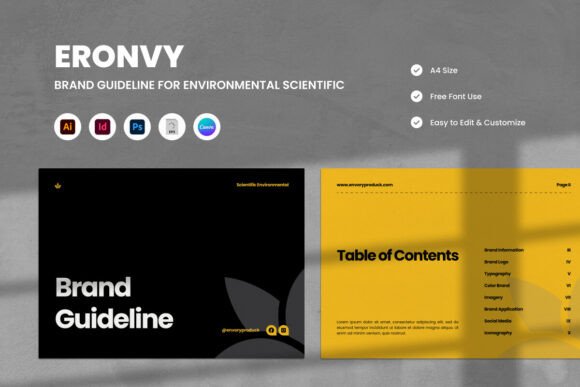
Scientific Brand Guideline: Bridging Precision and Nature
In the intersection where rigorous data meets ecological stewardship, a unique visual challenge arises. Scientists and environmental advocates often struggle to communicate complex findings without sounding dry or overly technical. This is where a specialized Scientific Brand Guideline becomes an essential tool. It is not merely a document listing colors and fonts; it is a strategic framework designed to translate the credibility of science into the warmth of nature-inspired aesthetics. For organizations ranging from biotech startups to conservation non-profits, this guideline serves as the bridge between hard facts and human connection.
The Core Purpose of a Scientific Visual Identity
A Scientific Brand Guideline acts as the rulebook for how an organization presents itself to the world. Unlike generic templates, this specific approach focuses on the dual needs of modern environmental brands: authority and empathy. When you look at a research paper, you expect precision. When you look at a campaign to save a forest, you expect passion. A well-crafted guideline merges these two distinct emotional tones into a cohesive visual language.
Consider a scenario where a marine biology firm needs to present data on coral reef degradation to potential investors. Without a structured brand identity, their presentation might look like a disjointed collection of spreadsheets and stock photos. However, by applying a Scientific Brand Guideline, they can utilize a color palette that reflects oceanic depths while maintaining typography that ensures every statistic is legible and trustworthy. The result is a narrative that feels both scientifically robust and visually compelling.
Real-World Applications Across Industries
The versatility of this template shines when applied to diverse sectors within the environmental and scientific community. Here are a few practical scenarios where this resource transforms communication:
- Biotechnology Startups: New companies in the green energy sector often face skepticism. By using a guideline that emphasizes clean lines and reliable typography, they signal stability. The "Brand Application" section helps them visualize how their logo looks on lab equipment versus investor pitch decks, ensuring consistency across all touchpoints.
- Environmental NGOs: Non-profits rely heavily on donor trust. A guideline with nature-inspired aesthetics allows them to create social media assets that feel organic rather than corporate. The "Imagery" section guides them in selecting photography that highlights biodiversity without resorting to clichés, fostering a deeper emotional connection with supporters.
- Academic Research Institutes: Universities and labs often have rigid branding. A flexible Scientific Brand Guideline allows them to modernize their public-facing materials. They can maintain their institutional integrity while adopting a more approachable tone for public outreach programs, making complex topics accessible to laypeople.
- Sustainable Product Brands: Companies selling eco-friendly goods need to prove their claims. Using the "Iconography" and "Color Brand" sections, they can create packaging and labels that instantly communicate sustainability. The structured layout ensures that certification logos and ingredient lists are presented clearly, reinforcing transparency.
Navigating the Eight Essential Sections
To truly leverage the power of this resource, one must understand how its eight core sections function in a real-world workflow. These sections are not just placeholders; they are interactive components designed to shape your brand's voice.
The journey begins with Brand Information. This is where you define your mission statement and core values. In an environmental context, this might involve articulating your commitment to carbon neutrality or ethical sourcing. Next, the Brand Logo section provides clear rules on spacing, sizing, and placement. This prevents common mistakes like stretching a logo or placing it against a busy background, which can dilute brand recognition.
Typography plays a critical role in readability. The Typography section offers a curated selection of fonts that balance modern elegance with scientific clarity. Whether you are writing a white paper or a tweet, the chosen typefaces ensure your message remains legible and professional. Similarly, the Color Brand section goes beyond simple hex codes. It suggests palettes inspired by natural elements—earthy greens, deep blues, and warm sands—while explaining how to use them to evoke specific emotions.
For digital engagement, the Social Media section is invaluable. It provides templates for posts, stories, and banners that adhere to platform-specific dimensions while maintaining your brand's aesthetic. Finally, the Brand Application and Iconography sections show how these elements come together in practice, from business cards to website icons, ensuring a seamless experience for your audience.
Customization and Flexibility for Every User
One of the most significant advantages of this template is its adaptability. No two scientific organizations are identical. A water quality testing service has different visual needs than a renewable energy consultancy. That is why the ability to Edit Every Word is crucial. You can change titles, subtitles, and body text to reflect your specific niche without breaking the design structure.
The flexibility extends to the visuals as well. With Flexible Fonts, you can adjust sizes and colors or even swap in a custom font if your brand requires it. Perhaps your organization prefers a more geometric sans-serif to emphasize engineering precision, or a softer serif to highlight botanical research. The template accommodates these choices effortlessly. Furthermore, the option to Customize Sections means you are not locked into a rigid format. If your brand does not require a dedicated iconography page, you can remove it. If you need to expand on your brand story, you can add new pages without disrupting the flow.
Technical Considerations Before You Begin
While the creative possibilities are vast, there are practical considerations to keep in mind before diving into customization. First, consider your primary output format. Do you need high-resolution print files for brochures, or are you focused solely on digital assets? This template supports both, offering Adobe Illustrator .AI and Photoshop .PSD files for professional designers who need full control over vector paths and layers. For those who prefer a more streamlined workflow, the included Canva Link allows for quick edits directly in the browser, making it accessible for team members without advanced design skills.
Another key factor is the file orientation and size. The template is designed in Standard A4 Size Landscape orientation with bleed included. This is particularly important for global business needs, as A4 is the international standard for documents. Whether you are printing a physical brand book to share with stakeholders or sending a PDF via email, the layout ensures that your content fits perfectly on the page without awkward cropping.
However, users should be aware of potential limitations. While the template is highly customizable, it assumes a certain level of familiarity with design principles. If you are completely new to branding, you might find the sheer number of options overwhelming. In such cases, it may be beneficial to start with the pre-set suggestions and make minor adjustments rather than overhauling the entire system immediately. Additionally, while the EPS and PDF files are excellent for sharing and printing, always check the specific requirements of your printer or digital platform to ensure compatibility.
Building Trust Through Consistency
Ultimately, the goal of a Scientific Brand Guideline is to build trust. In an era of misinformation, especially regarding climate change and health, consistency is the hallmark of reliability. When your audience sees the same elegant design, the same thoughtful typography, and the same nature-inspired colors across your website, your reports, and your social media, they begin to associate those visuals with your expertise.
This template empowers you to tell your story with clarity and cohesion. It moves beyond the theoretical aspects of branding and provides a practical toolkit for execution. Whether you are a seasoned researcher looking to modernize your institute's image or an entrepreneur launching a sustainable product line, having a structured, professional foundation allows you to focus on what matters most: your science and your mission. By leveraging these 10 fully customizable pages, you ensure that your brand stands out not just for its innovation, but for its unwavering commitment to quality and environmental responsibility.