Therapy Planner Stickers: A Practical Guide
In the realm of digital planning and stationery customization, specific niche products often emerge to meet unique organizational needs. Therapy planner stickers represent one such category, designed to integrate mental health awareness into daily scheduling routines. These digital assets allow users to visually mark appointments, track self-care activities, or simply add a thematic element to their personal planners. Understanding the utility, technical specifications, and appropriate use cases for these files is essential for anyone considering them for personal projects or small business ventures.
Understanding the Product Format
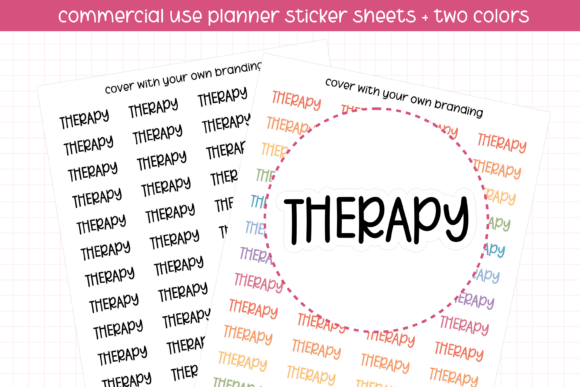
It is important to clarify that therapy planner stickers in this context are not physical items shipped from a warehouse. Instead, they are digital download files intended for immediate printing and cutting. This format distinguishes them from traditional retail stationery, offering flexibility in production volume and customization. The typical package includes high-resolution image files in formats such as .JPG and transparent .PNG, alongside vector-based files compatible with cutting software like Silhouette Studio.
The design usually features the word "therapy" rendered in a legible, approachable font. Common aesthetic choices include classic black and white variations for high contrast, or muted rainbow colorways intended to evoke a sense of calm. The dimensions are standardized to fit most popular planner systems. A standard sheet typically measures 7 inches by 5 inches, containing multiple individual stickers approximately 0.3 inches in height. This compact size ensures they fit within the narrow margins of hourly or daily planner pages without obscuring written notes.
Reasons for Interest in Mental Health Planning Tools
Individuals often seek out therapy planner stickers for several practical reasons rooted in organization and psychological well-being. For those attending regular counseling sessions, visual markers can serve as effective reminders to prepare for appointments or reflect on progress. In a busy schedule, a distinct icon can make a therapy session stand out among other commitments, reducing the likelihood of missed appointments.
Beyond appointment tracking, these stickers appeal to individuals interested in gamifying their self-care routines. The act of physically placing a sticker can provide a small sense of accomplishment, reinforcing positive habits. Additionally, for entrepreneurs in the planner community, these digital files offer a low-barrier entry point into creating custom stationery products. By purchasing a file rather than manufacturing physical goods, creators can test market demand with minimal financial risk before committing to larger inventory investments.
Benefits and Practical Advantages
The primary advantage of using digital therapy planner stickers lies in their versatility and cost-efficiency. Since the user controls the printing process, there is no need to wait for shipping or pay for individual units at retail prices. Once the file is downloaded, it can be printed repeatedly on various types of paper, from standard adhesive sheets to specialty vinyl. This allows for experimentation with different textures and finishes depending on the available materials.
For those utilizing cutting machines, the inclusion of pre-set cutlines in software-specific files streamlines the production workflow. Users do not need to manually trace outlines, which saves time and ensures precision. Furthermore, the availability of blackout files—transparent PNGs used to create negative space—allows for advanced design techniques, such as layering text over colored backgrounds for a professional look. The ability to print on demand also means waste is minimized; users only produce what they need for the current week or month.
Tradeoffs and Considerations
While digital downloads offer flexibility, they require specific equipment and technical competence that physical stickers do not. To utilize these files effectively, the user must have access to a printer capable of handling adhesive paper and a cutting machine equipped with the necessary software. Without these tools, the digital files remain unusable. This creates a barrier to entry for casual planners who prefer ready-to-use products.
Another consideration is the quality of the final output, which is entirely dependent on the user's hardware and materials. A high-resolution file will still appear pixelated if printed on a low-quality printer or cut with a dull blade. Unlike mass-produced stickers, which undergo quality control checks, the responsibility for alignment, color accuracy, and adhesion rests solely with the creator. Additionally, while the files are ready to print, the initial setup time for configuring cut settings and aligning layers can be significant for beginners.
Ideal Use Cases
Therapy planner stickers are an excellent fit for individuals who already engage in digital planning and possess the necessary crafting equipment. They are particularly suitable for:
- Small Business Owners: Entrepreneurs looking to expand their product line with niche planner accessories without holding inventory.
- Dedicated Planners: Individuals who enjoy the process of customizing their own stationery and value the ability to match specific color palettes.
- Mental Health Advocates: People who wish to normalize therapy discussions through visible, positive affirmations in their daily schedules.
- Gift Creators: Those who want to assemble personalized planner kits for friends or family members who attend therapy.
In these scenarios, the ability to customize branding, choose specific paper stocks, and control production volume makes the digital format superior to buying pre-made stickers.
When Alternatives May Be Preferable
Despite their benefits, digital therapy planner stickers may not be the right choice for everyone. If a user lacks a cutting machine or prefers instant gratification without the learning curve of design software, purchasing physical stickers is a more practical alternative. Pre-made stickers guarantee consistent quality and save the time required for printing, weeding, and applying transfer tape.
Furthermore, for those seeking complex designs or full-color illustrations beyond simple text, these specific files may be too limited. While the provided designs cover basic needs, they may not satisfy users looking for intricate artwork or highly specialized layouts. In such cases, commissioning a custom design or exploring broader digital marketplaces with more extensive libraries might yield better results. Finally, if the goal is purely decorative without the intent to organize or track, simpler washi tapes or pen markings might suffice without the need for dedicated sticker production.
Decision-Making Insights
Before acquiring therapy planner stickers, potential users should evaluate their current resources and long-term goals. Ask whether you have the necessary hardware to print and cut the files effectively. Consider if the time investment in setting up the project aligns with your schedule. For business owners, review the licensing terms carefully; typically, these files allow for the sale of printed end-products but prohibit reselling the digital files themselves. Understanding these constraints is crucial for maintaining ethical standards and avoiding legal issues.
Ultimately, the decision to use these digital assets depends on the balance between creative control and convenience. If the ability to produce unlimited, customized stickers outweighs the effort of managing the production process, then these files offer significant value. However, if simplicity and immediate usability are priorities, traditional physical options remain a strong contender. By weighing these factors, users can determine if therapy planner stickers align with their specific organizational and creative objectives.