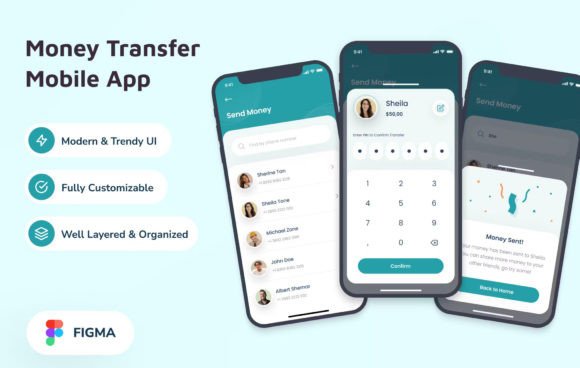
Money Transfer Mobile App: Designing for Real-World Financial Flow
In today's digital economy, the speed of a transaction often matches the speed of thought. Whether you are splitting a dinner bill with friends, paying a freelancer for a logo, or sending support to family abroad, the friction between intent and action needs to be non-existent. This is where a Money Transfer Mobile App becomes essential. It is not merely a utility; it is the bridge that connects financial decisions to immediate outcomes. For designers, developers, and business owners, understanding how these apps function in real life is just as important as knowing the code behind them.
The Core Purpose of Modern Money Transfer Solutions
A Money Transfer Mobile App is a software platform designed to facilitate the movement of funds from one account to another via a smartphone. While the definition sounds technical, the reality is deeply human. These applications replace the need for physical cash, checks, and visits to brick-and-mortar banks. They leverage secure networks to move value instantly, often at a fraction of the cost of traditional wire transfers.
The evolution of these apps has shifted from simple bank portals to comprehensive financial ecosystems. Users no longer just want to send money; they want to track expenses, manage budgets, and integrate payments into their daily workflows seamlessly. The design philosophy must reflect this shift. A cluttered interface or confusing navigation can lead to user abandonment, especially when someone is in a hurry to pay a bill or settle a debt.
When and Why People Rely on Digital Transfers
The usage of a Money Transfer Mobile App spans a vast array of scenarios, dictated by timing and necessity. Consider the "split-the-bill" moment at a restaurant. In the past, this involved awkward calculations and waiting for someone to have exact change. Now, with a tap on a screen, the transaction is complete before the check arrives. This immediacy is the primary driver for adoption among adults aged 20 to 50.
Professionally, the landscape has changed even more dramatically. Freelancers and small business owners cannot afford to wait three days for a check to clear. When a graphic designer finishes a project, they expect payment immediately upon delivery. A robust money transfer app allows them to invoice clients and receive funds within seconds, improving cash flow and reducing administrative overhead. Similarly, entrepreneurs managing remote teams across different time zones rely on these tools to pay salaries without the delays associated with international banking systems.
On a personal level, the app serves as a safety net. If a friend's car breaks down on the highway, the ability to send emergency funds instantly can make all the difference. For families supporting relatives in other countries, these apps offer transparency regarding exchange rates and fees, ensuring that the intended amount actually reaches the recipient.
Real-World Scenarios Across Different Sectors
- Creative Professionals: Photographers and writers use these apps to accept deposits quickly, securing projects before work begins. The ability to share a direct payment link streamlines the client onboarding process.
- Educators and Tutors: Online tutors often operate outside traditional payroll systems. They use mobile transfer apps to collect session fees directly from students, avoiding the complexity of setting up a full merchant account.
- Event Organizers: Planning a wedding or a conference involves collecting contributions from dozens of people. A dedicated money transfer feature allows organizers to create group collection requests, tracking who has paid and who hasn't in real-time.
- Retail and Small Business: Local shop owners use QR codes linked to their transfer accounts to accept payments from customers who prefer not to carry cash or use credit cards due to high processing fees.
Designing for Trust and Efficiency
The success of a Money Transfer Mobile App hinges on its User Interface (UI) and User Experience (UX). When dealing with money, users are inherently cautious. A design that feels outdated or disorganized raises red flags about security. This is why modern design trends emphasize cleanliness, clarity, and visual hierarchy.
A well-structured design ensures that the most critical actions—sending money, viewing balance, and checking history—are accessible with minimal effort. On an iPhone X screen size, where bezel-free displays offer more vertical space but require careful thumb-zone consideration, every pixel counts. The layout must guide the user's eye naturally, reducing cognitive load during transactions.
Trendy, modern UI elements do more than look good; they build confidence. Rounded corners, soft shadows, and high-contrast typography signal professionalism. Furthermore, using free fonts that are legible across various devices ensures accessibility for a wider audience. When users can read numbers clearly and understand status indicators instantly, anxiety decreases, and trust increases.
The Value of Organized Layers and Source Files
For creators and developers looking to build or customize a financial application, having access to well-organized layers is invaluable. A chaotic file structure slows down the development process and increases the risk of errors. When a design team receives a Figma source file with logical grouping, they can iterate faster, test new features, and adapt the interface to specific brand guidelines without starting from scratch.
This organizational rigor translates to the final product. An app built on a solid foundation handles complex data flows better. For instance, if a user initiates a transfer and the network lags, the app needs to display a loading state that reassures rather than confuses. These micro-interactions are planned in the design phase, relying on the clarity of the original source files.
What to Consider Before Choosing a Platform
Before downloading a new Money Transfer Mobile App or integrating one into a business workflow, several practical factors must be weighed. Security is paramount. Users should verify that the app employs end-to-end encryption and two-factor authentication. No amount of sleek design compensates for poor security practices.
Cost structures also vary significantly. Some apps charge per transaction, while others offer subscription models. International transfers introduce currency conversion fees that can eat into margins. It is crucial to read the fine print and calculate the total cost of ownership based on your specific volume of transactions.
Usability is another key consideration. Does the app support the operating system you use? Is the customer support responsive if a transaction gets stuck? For businesses, integration capabilities matter. Can the app connect with accounting software like QuickBooks or Xero? The right tool should fit seamlessly into your existing ecosystem, not disrupt it.
Empowering Users Through Better Design
Ultimately, the goal of a Money Transfer Mobile App is to empower individuals and businesses to manage their finances with autonomy and ease. By focusing on clean, trendy, and modern UI design, developers can create tools that feel intuitive rather than intimidating. When combined with well-organized layers and clear documentation, these resources allow creators to launch solutions that truly meet market needs.
Whether you are a blogger monetizing content, a freelancer managing invoices, or a parent sending allowance, the right app transforms financial management from a chore into a seamless part of daily life. As technology continues to evolve, the emphasis will remain on speed, security, and simplicity. The best apps are those that disappear into the background, allowing users to focus on what matters most—their goals, their relationships, and their future.