Redefining Digital Journalism: The Evolution of the News Reading Mobile App
In an era defined by information overload, the way professionals and consumers ingest news has undergone a radical transformation. The traditional newspaper model has long since yielded to digital platforms, but the current landscape is dominated by fragmented feeds, algorithmic echo chambers, and cluttered interfaces that prioritize engagement over clarity. Enter the News Reading Mobile App, a design philosophy and functional framework that seeks to restore order, aesthetics, and usability to the daily ritual of staying informed. This shift represents more than just a software update; it signals a broader industry pivot toward intentional design, user-centric workflows, and the reclamation of attention in a distracted world.
For entrepreneurs, marketers, and creative professionals, the quality of information intake directly impacts decision-making and innovation. A well-crafted News Reading Mobile App serves as the gateway to this critical data stream, filtering noise and delivering insights with precision. As we examine the features driving this category—specifically those optimized for modern devices like the iPhone X—we uncover a deeper narrative about how technology is adapting to human needs rather than forcing humans to adapt to technology.
The Imperative for Clean, Trendy, and Modern UI Design
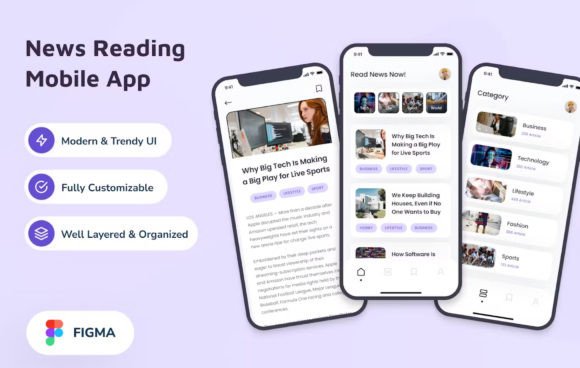
The visual language of mobile applications has evolved from functional utility to aesthetic necessity. In the context of news consumption, a Clean, Trendy, Modern UI Design is not merely a superficial choice; it is a cognitive aid. When users open a news application, they are often seeking clarity amidst chaos. A cluttered interface induces stress and fatigue, leading to shallow reading and reduced retention. Conversely, a minimalist approach utilizes whitespace effectively, guiding the eye naturally through headlines, summaries, and full articles.
This design ethos aligns with broader consumer trends where "digital wellness" is becoming a priority. Users are increasingly rejecting aggressive pop-ups, autoplay videos, and infinite scrolls that trap them in passive consumption loops. Instead, they demand interfaces that respect their time and mental bandwidth. A modern News Reading Mobile App leverages these preferences by employing high-contrast typography, intuitive navigation patterns, and a color palette that enhances readability without overwhelming the senses. For designers and product managers, this means prioritizing the hierarchy of information, ensuring that the most critical stories are accessible within seconds of launching the application.
Optimizing for the iPhone X Screen Size and Beyond
The introduction of the iPhone X marked a pivotal moment in mobile hardware, introducing edge-to-edge displays and the removal of the physical home button. This hardware evolution necessitated a corresponding revolution in software architecture. A News Reading Mobile App designed specifically with the iPhone X screen size in mind demonstrates a commitment to maximizing real estate while maintaining touch accessibility.
Designing for the notch and the gesture-based navigation requires a nuanced understanding of safe areas and dynamic layouts. It involves pushing content to the edges to utilize the immersive display while ensuring that interactive elements remain comfortably reachable. This level of specificity is crucial for professionals who rely on their devices throughout the day. Whether reviewing market trends on a commute or analyzing competitor strategies during a lunch break, the seamless integration of the app with the device's native capabilities ensures an uninterrupted workflow. The focus on specific screen dimensions like the iPhone X also sets a benchmark for responsive design across other modern smartphones, ensuring that the core experience remains consistent regardless of the device used.
Structured Complexity: The Power of Well-Organized Layers
Beneath the polished surface of any successful application lies a complex system of interactions and data structures. One of the defining characteristics of a professional-grade News Reading Mobile App is its use of Well-organized layers. In the realm of UI/UX design, layering refers to the strategic stacking of visual elements to create depth and hierarchy without causing confusion. This technique allows developers and designers to separate navigation, content, and interaction points into distinct logical groups.
For the end-user, well-organized layers translate to a fluid experience where transitions between sections feel natural rather than jarring. Consider the action of expanding a headline into a full article. In a poorly structured app, this might involve a hard cut or a confusing animation. In a layered design, the transition is smooth, preserving the context of the previous screen while introducing new information. This is particularly relevant for freelancers and creators who switch contexts rapidly. They need an interface that supports rapid scanning followed by deep dives without losing their place in the information ecosystem.
Furthermore, organized layers facilitate better maintenance and scalability for development teams. When the codebase and design files reflect a clear hierarchy, adding new features—such as personalized filters, dark mode toggles, or audio narration—becomes a streamlined process. This structural integrity is what separates a temporary prototype from a robust, market-ready product capable of evolving with changing user expectations.
Accessibility and Inclusivity Through Free Fonts
Typography plays a fundamental role in the legibility and tone of a news application. The choice to utilize Free fonts used in the design of a News Reading Mobile App reflects a forward-thinking approach to both economics and inclusivity. High-quality, open-source typefaces have reached a maturity level where they rival proprietary options in terms of character variety, weight distribution, and screen optimization.
By leveraging free fonts, developers can ensure that the application remains lightweight and fast-loading, a critical factor for users on limited data plans or slower connections. More importantly, it democratizes access to excellent design. Startups and independent creators can build premium-feeling products without incurring prohibitive licensing costs. From a user experience perspective, the selection of readable, sans-serif fonts designed for screens reduces eye strain during extended reading sessions. This attention to typographic detail signals to the audience that the platform values their comfort and comprehension, fostering trust and loyalty.
Empowering Creators: The Value of Figma Source Files and Documentation
For the community of designers, entrepreneurs, and agencies looking to enter the digital publishing space, the availability of a comprehensive Figma Source File is invaluable. In the modern product development lifecycle, speed and iteration are key. Having access to a ready-made, high-fidelity design file accelerates the prototyping phase, allowing teams to focus on customization and unique value propositions rather than building foundational layouts from scratch.
The inclusion of Font Link Documentation further streamlines this process. Often, the disconnect between design intent and final implementation occurs due to missing assets or unclear specifications. Detailed documentation bridges this gap, providing developers with precise instructions on font weights, spacing, and variable usage. This holistic package transforms a static design concept into a living, breathing blueprint for a successful application launch. It empowers creators to iterate quickly, test hypotheses, and bring their vision to market with confidence.
Market Trends and the Future of Information Consumption
The rise of the sophisticated News Reading Mobile App is not an isolated phenomenon but part of a larger shift in how society interacts with information. We are witnessing a move away from the "attention economy," which monetizes user time through addiction mechanics, toward a "value economy," where platforms compete on the quality and relevance of the content delivered. Professionals and enthusiasts are increasingly willing to pay for—or invest time in—tools that enhance their productivity and knowledge base.
This trend is driven by a growing awareness of misinformation and the fatigue associated with social media algorithms. Users crave curated, reliable sources presented in a format that respects their intelligence. A modern news app addresses these needs by offering customizable feeds, verified source indicators, and distraction-free reading environments. As artificial intelligence and machine learning continue to advance, these apps will likely integrate even more personalized features, predicting user interests and summarizing complex topics automatically.
However, the core principles remain unchanged: clarity, organization, and respect for the user. The design features discussed—from clean UI to organized layers—are the foundation upon which future innovations will be built. As the line between work and leisure continues to blur, the tools we use to stay informed must evolve to support a balanced, efficient, and insightful lifestyle.
Practical Observations for Industry Leaders
For business leaders and marketers, the implications of adopting this design philosophy are significant. An application that feels good to use encourages higher retention rates and deeper engagement. It transforms a utility into a habit. When a user associates a brand with a positive, frictionless experience, that brand becomes a trusted partner in their daily routine. This is particularly true in the B2B sector, where decision-makers rely on timely, accurate information to drive strategy.
Moreover, the emphasis on modular design and open resources suggests a future where collaboration and sharing become central to product development. By utilizing shared assets like free fonts and open design systems, the industry can collectively raise the standard of mobile experiences. This collaborative spirit fosters innovation, allowing smaller players to compete with tech giants on the basis of superior user experience rather than sheer scale.
Ultimately, the News Reading Mobile App represents a convergence of art, technology, and psychology. It acknowledges that while the medium of news has changed, the human desire for truth, understanding, and connection remains constant. By embracing clean design, thoughtful structure, and accessible resources, creators can build platforms that not only inform but also inspire. As we look toward the future, the success of these applications will depend on their ability to adapt to the ever-changing needs of a global, connected audience, ensuring that the flow of information remains clear, meaningful, and empowering.