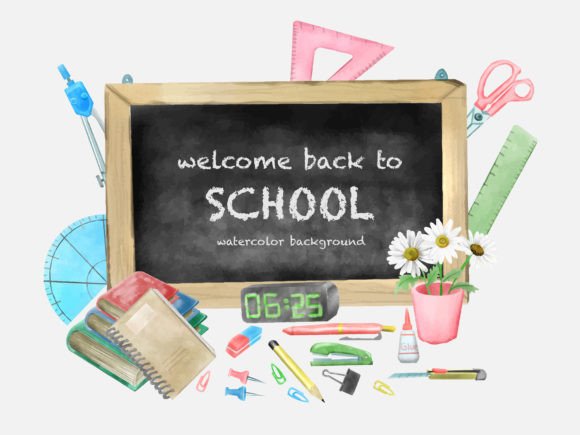
Watercolor Back to School Background: A Guide to Smart Design Choices
The academic year brings a surge in creative demand, from classroom decorations to marketing campaigns for tutoring centers. In this visual landscape, a Watercolor Back to School Background offers a unique aesthetic that balances nostalgia with modern vibrancy. Unlike rigid vector graphics or stock photos that can feel generic, watercolor textures provide an organic, hand-crafted feel that resonates with educators and parents alike. However, selecting the right asset is not merely about finding a pretty image; it is about ensuring the file meets your technical and creative requirements.
Many creators rush into purchasing digital assets without considering the long-term usability of the files. This often leads to frustration when the design cannot be adapted to specific branding needs or print specifications. A high-quality Watercolor back to school background in colourful illustration should serve as a versatile foundation, not a limitation. Understanding the difference between a static image and a fully editable resource is the first step toward avoiding costly redesigns.
The Trap of Static Images vs. Editable Layers
One of the most common mistakes designers and small business owners make is downloading a high-resolution JPEG without verifying if the source files are available. While a JPG looks great on a screen, it is essentially a flattened image. If you need to change the color scheme to match your school's brand colors, or if you need to move a specific element like a pencil or ruler, a flat image forces you to start over or use complex masking techniques that often degrade quality.
This oversight directly impacts efficiency and cost. Time spent trying to manipulate a non-editable file is time taken away from actual content creation. Furthermore, attempting to scale a raster image for large-format printing, such as a poster or a book cover, can result in pixelation and a loss of professional polish. The solution lies in prioritizing assets that include vector formats, specifically AI Adobe Illustrator files and EPS files.
When you choose a resource where layers are carefully organized and labeled, you gain immediate control. You can isolate individual brush strokes, adjust opacity, or swap out elements entirely. For instance, if your campaign requires a blue and white theme but the original illustration is red and yellow, an editable file allows you to recolor specific layers instantly. This flexibility ensures that your final presentation remains cohesive and aligned with your visual identity.
Why File Formats Matter for Your Workflow
Understanding the file types included in a download is crucial for both beginners and professionals. The combination of AI, EPS, and JPG files covers almost every scenario you might encounter. The AI Adobe Illustrator file is the workhorse for customization. It preserves the vector data, meaning you can resize the artwork infinitely without losing sharpness. This is essential for applications ranging from small social media graphics to massive banners.
The EPS file serves as a universal format compatible with various design software beyond just Adobe products, ensuring compatibility if you collaborate with others using different tools. Finally, the JPG file provides a quick preview or a ready-to-use option for web projects where editing is not required. Ignoring the value of these multiple formats can limit your workflow. Always verify that your purchase includes these options before committing.
Typography and Customization Pitfalls
Another area where creators often stumble is typography. Many pre-made designs come with placeholder text that uses standard fonts, which may not align with the whimsical or educational tone of a watercolor illustration. Using a mismatched font can break the visual harmony of the piece. For example, pairing a delicate watercolor texture with a harsh, industrial sans-serif typeface creates a disjointed look that fails to communicate the intended warmth.
A superior approach involves selecting resources that either suggest appropriate pairings or allow for easy text integration. The use of the Chalkduster font is a strategic choice for back-to-school themes. Its handwriting style mimics the texture of chalk on a blackboard, creating a natural synergy with the watercolor aesthetic. When customizing your project, ensure that your text color contrasts sufficiently with the background while maintaining readability. Do not simply accept the default text settings; take the time to adjust the font size, weight, and color to suit your specific message.
Furthermore, do not underestimate the power of layer organization. If the layers are not labeled, finding the specific element you wish to modify becomes a tedious game of trial and error. A well-structured file saves hours of work. Before purchasing, check if the seller mentions that layers are "carefully organized and labeled." This detail indicates a level of professionalism that translates directly into ease of use for you.
Application Scenarios: Beyond the Basics
The versatility of a Watercolor Back to School Background extends far beyond simple desktop wallpapers. Educators can use these assets to create engaging lesson plans, syllabus covers, and classroom posters that capture students' attention immediately. Entrepreneurs running tutoring services or educational blogs can leverage these illustrations for book covers, social media headers, and email newsletters.
However, applying these backgrounds incorrectly can dilute their impact. A common error is overcrowding the design. Watercolor art thrives on negative space. When adding text or other graphic elements, resist the urge to fill every inch of the canvas. Allow the colorful illustration to breathe. This balance ensures that the key information stands out clearly rather than getting lost in a sea of patterns.
Consider the medium of your final output. If you are printing a physical poster, ensure you have selected the highest resolution file available. If you are designing a digital ad, optimize the file size to prevent slow loading times. The ability to customize the text color and font means you can adapt the same base illustration for different platforms without needing to commission new artwork each time.
What to Check Before You Buy
To avoid the pitfalls of poor quality or unusable files, conduct a thorough evaluation before making a purchase. First, confirm the file formats. Ensure the listing explicitly states the inclusion of AI, EPS, and JPG files. Second, review the license terms. Understand whether the asset is for personal use only or if it permits commercial application, especially if you plan to sell products featuring the design.
Third, look for evidence of customization capabilities. Does the description mention editable text? Are the layers labeled? These features are non-negotiable for anyone serious about creating professional-grade materials. Finally, check the font usage. Knowing that the design utilizes the Chalkduster font helps you anticipate the style and ensures you have the necessary licensing for that typeface if you plan to edit the text extensively.
By taking these precautions, you protect your investment and streamline your creative process. A thoughtful selection of a Watercolor Back to School Background empowers you to produce high-quality visuals efficiently. Whether you are a seasoned designer or a hobbyist looking to spruce up your classroom, choosing the right toolset makes all the difference between a mediocre project and a standout success.
Thank you so much for choosing my store 3 3 3. We are committed to providing resources that empower your creativity and simplify your workflow. With our easy-to-use and editable files, you can focus on what matters most: bringing your ideas to life.