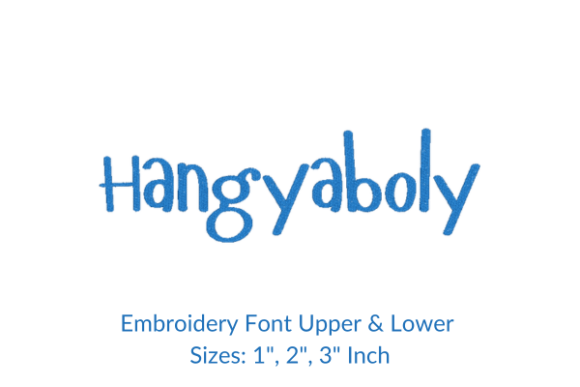
Hangyaboly Font Embroidery Design: A Strategic Tool for Personalized Textile Branding
In the competitive landscape of textile customization, the choice of typography often dictates the perceived value of a finished product. The Hangyaboly Font Embroidery Design is not merely a collection of stitched letters; it is a strategic asset for creators and business owners aiming to elevate their brand identity through high-quality personalization. Whether you are producing custom apparel for a boutique line, creating commemorative items for events, or fulfilling individual orders for clients, the precision and aesthetic appeal of this font set can significantly influence customer satisfaction and operational efficiency.
This embroidery font allows you to write names, dates, or quotes on any fabric with a level of detail that generic fonts often lack. However, integrating the Hangyaboly Font Embroidery Design into your workflow requires more than just downloading a file. It demands an understanding of how specific stitch counts, sizing constraints, and fabric interactions affect the final outcome. By approaching this design tool with a clear plan, you transform a simple text element into a powerful communication channel that reinforces your professional standards.
The Strategic Value of High-Quality Typography in Embroidery
For entrepreneurs and small business owners, consistency is the cornerstone of branding. When a client commissions a garment with a name or logo, they are investing in a representation of their identity. Using a low-resolution or poorly constructed font can result in messy stitching, thread breakage, or illegible text, all of which damage your reputation. The Hangyaboly Font Embroidery Design addresses these concerns by offering a robust structure that maintains integrity across various applications.
Strategically, this font serves as a differentiator in a crowded market. While many competitors rely on standard machine fonts that look identical across thousands of products, the unique character of Hangyaboly allows for distinct visual positioning. This uniqueness supports long-term results by encouraging repeat business. Clients who receive a personalized item with crisp, well-defined lettering are more likely to perceive the creator as a specialist rather than a generalist. In the realm of customer experience, the tactile quality of the embroidery—how the stitches sit on the fabric—is just as important as the visual appearance. This design ensures that the "feel" of the text matches its visual promise.
Optimizing Operations Through File Compatibility
Efficiency in production is critical for freelancers and studio owners managing multiple orders simultaneously. One of the primary advantages of the Hangyaboly Font Embroidery Design is its versatility regarding file formats. This machine embroidery design comes with multiple embroidery file formats, ensuring compatibility with a wide range of embroidery machines from different manufacturers.
This compatibility reduces technical friction in your operations. Instead of spending valuable time converting files or troubleshooting errors due to format incompatibility, you can integrate this font directly into your existing digital workflow. For decision-makers overseeing production schedules, this reliability means fewer bottlenecks and faster turnaround times. It allows you to scale your services without compromising on quality or increasing the risk of machine downtime. When planning your inventory of digital assets, prioritizing multi-format fonts like Hangyaboly is a practical step toward a resilient production environment.
Understanding Dimensions and Stitch Counts for Precision Planning
A common pitfall in embroidery projects is underestimating the relationship between size, stitch count, and fabric density. The documentation provided with the Hangyaboly Font Embroidery Design includes specific sizes and stitches information shown below for the characters "A" and "a" in each available size. This data is crucial, but it represents only a summary of what is available in this download file.
To make informed decisions, you must understand that these metrics serve as a baseline. For the full dimension details of the 156 letters in this set, you should click on the More Sewing Info PDF button on this page. Accessing this comprehensive data is a non-negotiable step for professionals. It allows you to calculate thread consumption accurately, estimate project costs, and determine the appropriate hoop size before committing to a physical run.
- Analyze the Baseline Data: Review the stitch counts for "A" and "a" to gauge the complexity of the font at different scales.
- Consult the Full Documentation: Use the detailed PDF to verify dimensions for less common characters or special symbols required for your specific project.
- Match Density to Fabric: Ensure that the stitch count does not overwhelm delicate fabrics or appear too sparse on heavy materials.
Ignoring these details can lead to puckering, skipped stitches, or a design that looks distorted when stitched out. By treating the technical specifications as part of your strategic planning process, you mitigate risks and ensure that every project meets high-quality standards.
Intentional Application: When and How to Use Hangyaboly
The effectiveness of the Hangyaboly Font Embroidery Design depends heavily on context. It is designed to personalize designs, making it ideal for writing names, dates, or quotes. However, the decision to use it should be guided by the specific goals of the project. Is the goal legibility from a distance, or intricate detail up close? Is the fabric a structured twill or a stretchy jersey?
For branding purposes, consider using this font for limited-edition items where exclusivity is key. The unique style of Hangyaboly can become a signature element of your brand, recognizable to your most loyal customers. In educational or corporate settings, where clarity is paramount, you might reserve this font for decorative accents rather than primary informational text, depending on the specific size requirements.
Practical examples of intentional use include:
- Commemorative Events: Using the font to stitch dates and names on event favors, where the emotional value of the text is enhanced by the font's elegance.
- Boutique Apparel: Applying short quotes or monograms on high-end garments to add a layer of sophistication that mass-market fonts cannot achieve.
- Custom Gifts: Leveraging the ability to write names on any fabric to create deeply personal gifts that stand out in terms of craftsmanship.
Before relying on this font for a large batch order, always conduct a test run on a scrap piece of the actual fabric intended for production. This step validates your assumptions about tension, stabilizer needs, and color contrast. It is a small investment of time that prevents costly mistakes later.
Risks of Unplanned Implementation
While the Hangyaboly Font Embroidery Design offers significant benefits, using it without clear goals or context carries risks. The most common error is scaling the design beyond its optimal range. Because the stitch count varies by size, enlarging the font too much can result in excessive running time and thread usage, while shrinking it too far can cause stitches to merge, rendering the text unreadable.
Furthermore, assuming that a single font works universally across all fabric types is a strategic mistake. The density of the Hangyaboly stitches may require different stabilizers for knit versus woven fabrics. Failing to adjust your technique based on the material can lead to poor adhesion or distortion. Another risk lies in over-personalization. While names and quotes add value, cluttering a design with too much text can detract from the overall aesthetic balance. Decision-makers must evaluate whether the addition of text enhances the product or complicates the visual hierarchy.
Additionally, neglecting to review the full dimension details for all 156 letters can lead to inconsistencies if your project involves complex phrases. Relying solely on the summary for "A" and "a" might give you a false sense of uniformity. Always cross-reference your specific character requirements against the complete dataset provided in the downloadable resources.
Building Long-Term Value Through Quality Control
Ultimately, the integration of the Hangyaboly Font Embroidery Design into your portfolio is about building long-term value. In an era where consumers are increasingly discerning about the quality of goods they purchase, the attention to detail demonstrated by using a superior font sets a standard of excellence. It signals that you care about the end result, not just the speed of production.
For educators and mentors teaching embroidery, this font serves as an excellent case study in the importance of preparation and technical knowledge. It demonstrates that successful outcomes are the result of careful planning, resource management, and adherence to best practices. For businesses, it contributes to a reputation for reliability and creativity.
As you move forward, remember that tools like Hangyaboly are enablers, not guarantees. Their success depends on your ability to apply them thoughtfully. By combining the technical capabilities of this machine embroidery design with a strategic approach to planning and execution, you can achieve better results, satisfy your clients, and strengthen your position in the market. The path to mastery in embroidery lies not just in the machine, but in the mind of the operator who understands how to leverage every asset at their disposal.